
Privacy, Dignity and Trust: Why Discreetness Matters in Care Tech
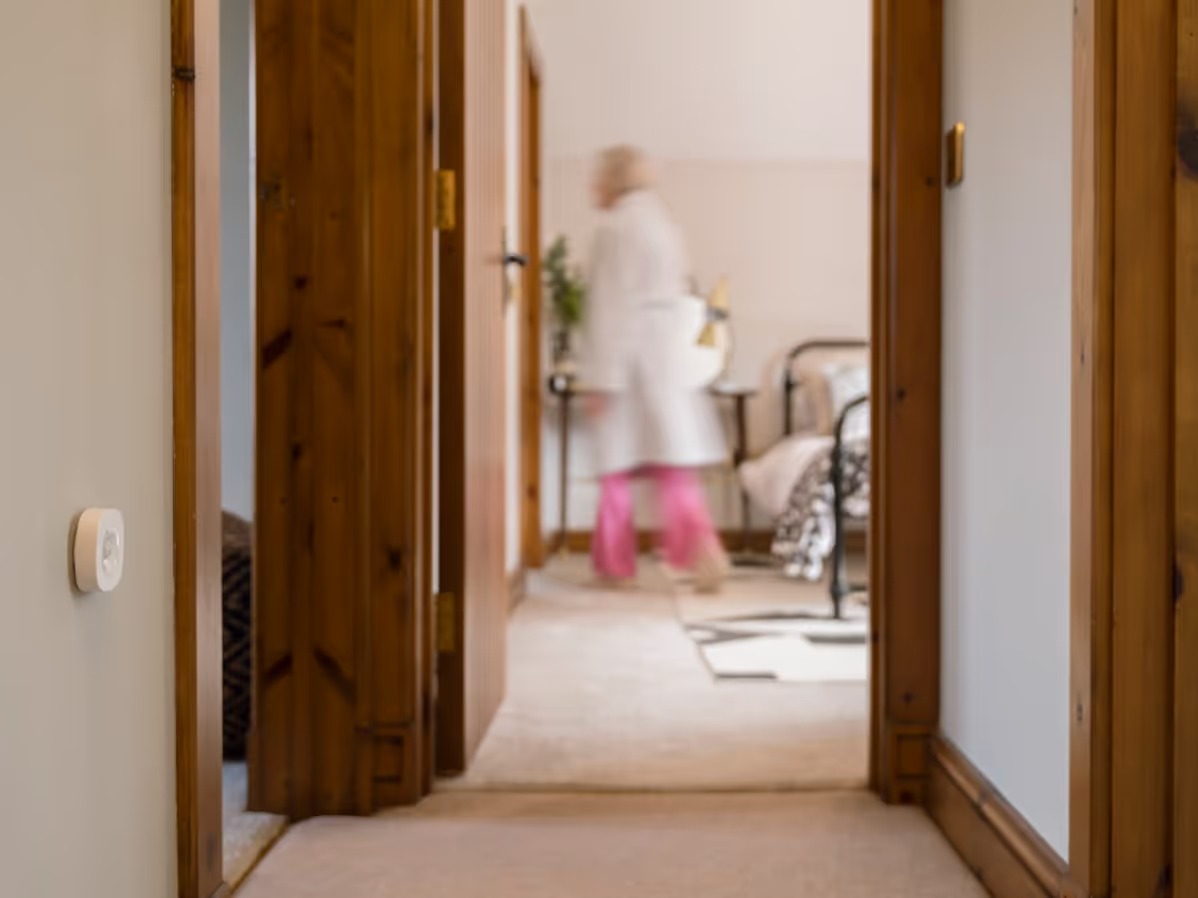
As health and social care increasingly move toward digital solutions, one question comes up repeatedly: how can we utilise technology to ensure people's safety without compromising their dignity or privacy?
For individuals receiving care at home, their living space is deeply personal. It’s where routines, relationships and independence exist. Any technology introduced into that space must be trusted, ethical and respectful, not just effective.
This is why discreet, non-intrusive monitoring is becoming a defining requirement for modern, person-centred care.
The Problem With Intrusive Monitoring
Camera-based systems and audio monitoring are often positioned as solutions for safety and oversight. But understandably, for many people, they raise immediate concerns:
- Feeling watched or surveilled
- Loss of privacy in personal spaces
- Reduced dignity, particularly for people living with dementia
- Resistance from families, care professionals or individuals themselves
In practice, these concerns can slow adoption, limit use and undermine trust, ultimately reducing the effectiveness of the technology.
When people don’t feel comfortable with a solution, they disengage from it. In care, that can mean missed insight, poorer outcomes and increased risk.
Why Discreet Monitoring Builds Trust
Discreet home care monitoring focuses on patterns, not people. Instead of capturing images or sound, it provides insight into daily living through anonymised data such as movement, activity trends and environmental conditions, like temperature.
This approach delivers several critical benefits:
- Preserves dignity by avoiding visual or audio surveillance
- Respects privacy in bedrooms, bathrooms and living spaces
- Feels acceptable and ethical to individuals and families
- Encourages long-term adoption rather than short-term compliance
For professionals and commissioners, this matters. Ethical technology is more likely to be embraced, sustained and scaled.
Why Privacy Matters More in Care Than Anywhere Else
People receiving care are often in vulnerable situations — living with frailty, long-term conditions or cognitive decline. Trust is not optional; it’s foundational.
Discreet monitoring helps ensure that:
- Individuals remain in control of their home environment
- Consent is meaningful and informed
- Care feels supportive rather than intrusive
- Technology enhances independent living rather than eroding it
As one family member shared:
“I prefer using Lilli over cameras - it gives her privacy.”
Sentiments like this reflect a wider truth: families want reassurance, not surveillance.
How Lilli Takes a Different Approach
Lilli is designed specifically for home care environments, with dignity and ethics built in from the start.
- No cameras
- No microphones
- No recordings
- No invasion of personal space
Instead, Lilli uses discreet sensors to understand changes in routine, behaviour and home environment. This enables early intervention, safeguarding and proactive care, without compromising trust.
The result is insight that professionals can act on, while individuals continue to live their lives without feeling observed.
Why This Matters for Procurement and Commissioning
For local authorities, care providers and commissioners, privacy-first design is not just a “nice to have” - it’s a procurement consideration.
Discreet monitoring solutions:
- Reduce resistance from service users and families
- Align with ethical frameworks and safeguarding principles
- Support informed consent and data governance requirements
- Enable wider rollout and sustained use
Choosing technology that people trust makes implementation smoother and outcomes stronger.
Safety Without Sacrificing Dignity
Technology should enhance care, not compromise it. The most effective solutions are those that people accept into their lives, quietly, respectfully and confidently.
Discreet home care monitoring allows professionals to spot risk early, support independence and prevent crises, while preserving what matters most: privacy, dignity and trust.
As care models continue to shift toward prevention and home-based support, solutions like Lilli show that it’s possible to deliver insight without intrusion, and safety without surveillance.
Find out more about our solution here.